-
Shop
- Advanced Technologies
- AI Career Advantage Collection
- Apple Accessories
- Bathroom
- Best Sellers
- Black Friday Sale
- Car Accessories
- Digital Products
- Digital Resources
- Fashion
- Furniture
- Gadgets
- Gift Ideas
- Health & Beauty
- Home
- Home & Garden
- Home Decor
- Home Electronics
- Home Supplies
- Independence Day
- Kitchen
- Lighting
- Mother’s Day
- Patio, Lawn & Garden
- Pet Supplies
- Pets
- Samsung Accessories
- Special Deals
- Sport & Outdoors
- Super Deals
- Travel & Outdoors
- Watches
- New arrivals
- Featured
Best Crimp Terminals: How to Choose Top Brands
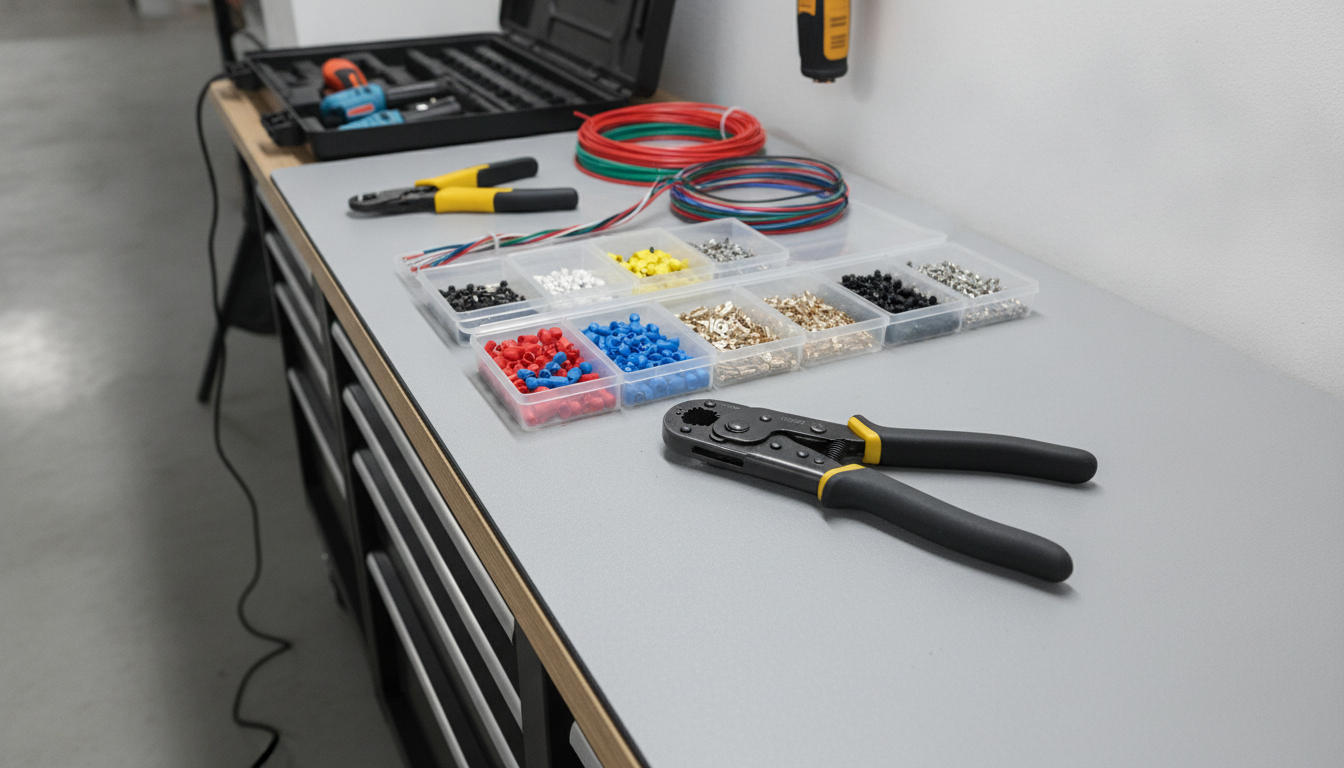
Who makes the best crimp terminals?
The “best” crimp terminals are made by manufacturers that control metal quality, plating, insulation materials, and tight dimensional tolerances—so the terminal fits the wire and tool correctly and holds up under heat, vibration, and corrosion. In practice, the best crimp terminals are the ones that match your wire gauge, application (automotive, marine, industrial), and crimping tool style (insulated, non-insulated, open-barrel).
For most buyers, top-tier crimp terminals share a few traits: consistent barrel thickness, cleanly formed seams, reliable tin or nickel plating, and insulation that doesn’t split when crimped. When those basics are right, you get a crimp that’s electrically low-resistance and mechanically strong—without needing to “over-crimp” or fight sloppy fitment.
What to look for when comparing brands
Match the standard: Many insulated terminals follow common color coding (red/blue/yellow) tied to wire gauge ranges. Better brands keep those ranges accurate so the terminal doesn’t feel loose on the conductor or too tight to insert.
Plating and corrosion resistance: Tin-plated copper is common and works well for general use. For harsher environments, seek terminals marketed for marine or high-corrosion exposure, often paired with heat-shrink insulation.
Application-specific designs: Open-barrel terminals (often used in OEM harnesses) require precise terminal geometry and the correct crimp die. Closed-barrel ring/spade terminals are more forgiving but still benefit from tighter manufacturing tolerances.
Choosing “best” for your project
If you’re building or repairing wiring that sees vibration (vehicles, equipment), prioritize terminals with robust barrels and predictable crimp results with your exact tool. For outdoor or marine wiring, heat-shrink, adhesive-lined terminals usually outperform basic vinyl-insulated options. For electronics and harness work, open-barrel terminals from reputable manufacturers paired with the correct ratcheting crimper deliver the most OEM-like reliability.
For a deeper breakdown of what separates premium terminals from bargain assortments, see the main guide: Who makes the best crimp terminals?
FAQ
What’s the difference between insulated and non-insulated crimp terminals?
Insulated terminals add a sleeve (vinyl, nylon, or heat-shrink) that helps prevent shorts and provides strain relief. Non-insulated terminals are compact and common in higher-heat areas, but they typically require added insulation like heat-shrink tubing.
Recommended for you
Small vs Large Cat Beds: What Cats Actually Prefer
Jul 23, 2026













Leave a comment