-
Shop
- Advanced Technologies
- AI Career Advantage Collection
- Apple Accessories
- Bathroom
- Best Sellers
- Black Friday Sale
- Car Accessories
- Digital Products
- Digital Resources
- Fashion
- Furniture
- Gadgets
- Gift Ideas
- Health & Beauty
- Home
- Home & Garden
- Home Decor
- Home Electronics
- Home Supplies
- Independence Day
- Kitchen
- Lighting
- Mother’s Day
- Patio, Lawn & Garden
- Pet Supplies
- Pets
- Samsung Accessories
- Special Deals
- Sport & Outdoors
- Super Deals
- Travel & Outdoors
- Watches
- New arrivals
- Featured
Wooden Lacing Shoe Toy Set: Fine-Motor Skills Practice
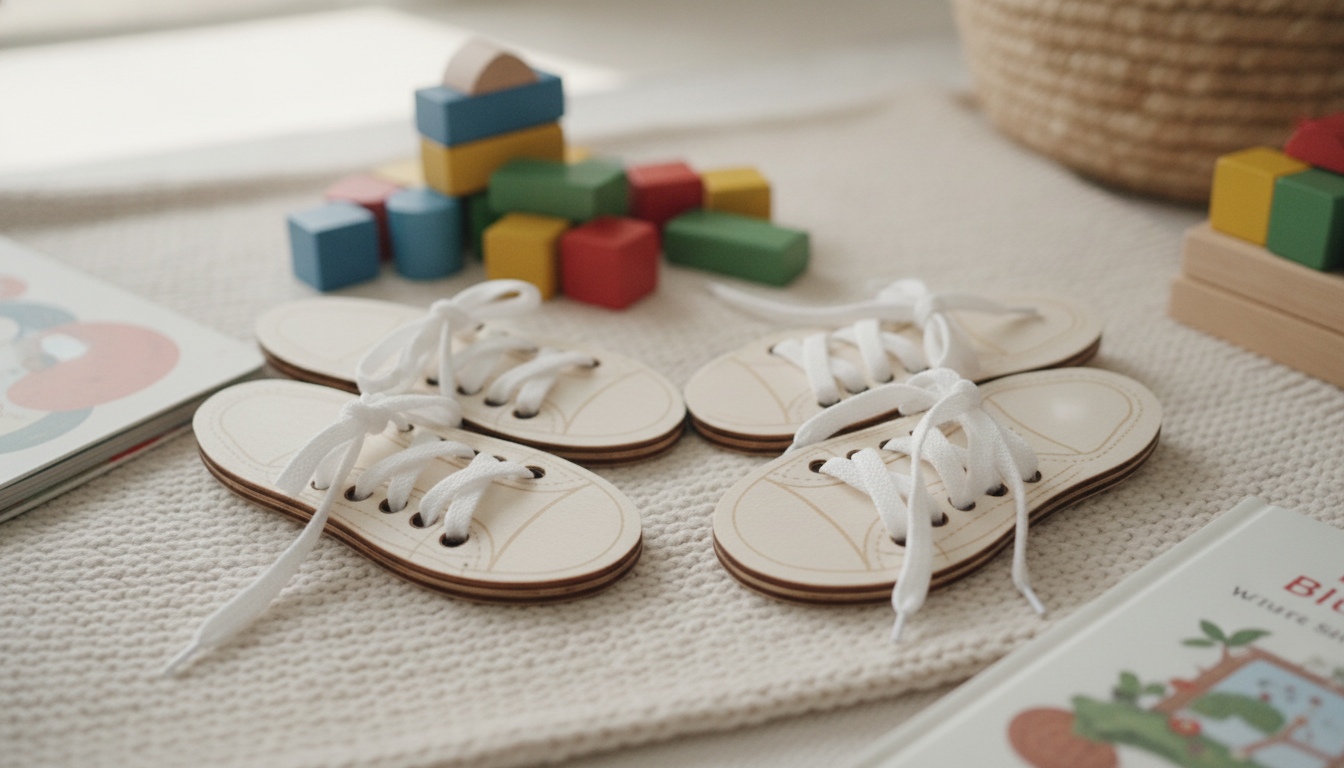
2PC Wooden Lacing Shoe Toy for Early Skill-Building Play
A wooden lacing shoe toy set turns everyday dressing skills into hands-on play. With sturdy, kid-friendly pieces and simple lacing practice, it supports fine-motor development, coordination, and early independence while keeping little hands engaged. For families who want screen-free activities that still feel “real,” a pretend shoe-lacing board is a practical way to rehearse the motions kids need later.
If you’re looking for a ready-to-go option, the 2PC Wooden Lacing Shoe Toy is an easy addition to a learning shelf, travel bag, or classroom station.
What’s Included and What It’s For
This set is designed to make repeated practice feel like play, not a lesson. Instead of trying to learn shoe-tying on a squirmy foot or a rushed morning, kids can slow down and focus on the steps.
- Set includes two wooden shoe-shaped lacing boards designed for repeated practice.
- Encourages early self-care skills by mimicking real shoe-lacing steps.
- Supports quiet, screen-free activity at home, in classrooms, or during travel downtime.
- Works well for guided practice with an adult or independent play once the concept is learned.
Because developmental timelines vary, it can help to keep expectations flexible and watch for progress in small increments. The CDC’s developmental milestone guidance is a helpful reference for understanding how skills typically build over time: CDC: Important Milestones.
Skills Kids Practice While They Play
Lacing is deceptively “big” work for small hands. Each hole is a mini problem to solve, and each pull of the lace strengthens the same muscles used for writing, buttoning, and zipping.
- Fine-motor strength: pinching, pulling, and threading the lace through holes.
- Hand–eye coordination: aligning the lace tip with each opening.
- Bilateral coordination: one hand stabilizes the board while the other threads and pulls.
- Sequencing and focus: repeating steps in order, building patience and persistence.
- Early independence: bridges the gap between pretend practice and real-life shoe tying.
Skill-building at a glance
| Skill area | How the toy helps | Simple activity idea |
|---|---|---|
| Fine-motor control | Threading and pulling the lace builds finger strength | Slowly lace every other hole, then switch to every hole |
| Hand–eye coordination | Aiming the lace tip improves accuracy | Challenge: lace without lifting the board off the table |
| Bilateral coordination | One hand holds, one hand laces | Hold the board with the non-dominant hand the whole time |
| Sequencing | Repeating steps builds routine | Say the steps out loud: in, pull, cross, in, pull |
| Attention span | Completing a full lace path rewards persistence | Set a timer for a calm “finish the pattern” goal |
For a deeper look at how hand skills develop, Zero to Three offers a solid overview of early fine-motor growth: Zero to Three: Fine Motor Development.
Age Guidance and Setup Tips
This type of activity tends to click when children can manage a pincer grip (thumb and finger control) and follow short, step-by-step directions. Some toddlers enjoy simple threading right away, while many preschoolers start showing stronger interest in “doing it myself” dressing tasks.
- Best for children who are beginning to master pincer grip and simple step-by-step tasks.
- Start with basic threading and pulling before introducing crossing patterns or bows.
- Use a flat surface for stability; place the board on a table or tray.
- Demonstrate once, then let the child try—small corrections work better than frequent takeovers.
- Short practice sessions (5–10 minutes) can be more effective than longer ones for beginners.
A simple setup tip: begin by lacing only the first two holes and leaving the lace partially threaded. That “starting point” reduces frustration and helps kids get right to the part that feels rewarding—pulling through and seeing progress.
Ways to Play Beyond Basic Lacing
Once a child understands “in and out” lacing, the same set can stay interesting with small, playful challenges. Changing the goal keeps practice from feeling repetitive.
For families building a calm activity corner, having a dedicated place to keep small items can help. A decorative organizer like the Modern Abstract Face Storage Box can store lacing toys, counters, flashcards, and other tabletop activities so they’re easy to grab without creating clutter.
Safety, Materials, and Care
For general toy-safety best practices (including age-appropriateness and routine inspection), the American Academy of Pediatrics offers practical guidelines: AAP: Choosing Safe Toys for Kids.
When This Set Makes the Most Sense
When kids are ready to practice regularly, keeping the activity accessible matters. Placing the 2PC Wooden Lacing Shoe Toy at child height (with a clear start-and-finish routine) can turn it into a go-to independence activity instead of a once-in-a-while “project.”
FAQ
How does a lacing shoe toy help with learning to tie shoes?
Threading and pulling practice the same coordination used with real shoelaces: guiding the lace tip, tightening with control, and keeping a steady sequence. Kids can start with simple in-and-out lacing, then progress to crossing patterns and, when ready, practicing the motions that lead into making a bow.
What age is a wooden lacing shoe toy appropriate for?
It’s commonly enjoyed by toddlers and preschoolers, especially once they can grasp small items and follow simple steps. Younger children may do best with close supervision and basic threading first, while older preschoolers can try patterns, crossings, and longer lace paths.
How should the wooden pieces be cleaned and stored?
Wipe the wood with a slightly damp cloth and avoid soaking or harsh cleaners. Check laces for fraying and store the boards flat so the laces don’t kink or tangle between play sessions.
Recommended for you

12 Patriotic Iron-On Flag & Eagle Patches for DIY
Jul 13, 2026
Montessori 5-in-1 Reading Nook: Books, Toys, Bench
Jul 13, 2026













Leave a comment